For the first time in a long while, members of Congress are saying the quiet part out loud: the deficit is too big, the debt is too dangerous, and pretending otherwise is no longer cost-free.
This week, leaders of the Bipartisan Fiscal Forum introduced a House resolution calling for a clear fiscal goal: reduce the federal budget deficit to 3% of GDP — roughly half its current level. The resolution was led by Reps. Bill Huizenga (R-MI) and Scott Peters, alongside Reps. Lloyd Smucker and Mike Quigley.
That target may sound modest. In today’s Washington, it’s borderline radical.
The resolution explicitly links runaway deficits to national security risk and slower economic growth, and urges the House to adopt the goal quickly — backed by enforcement mechanisms meant to keep it from becoming just another forgotten benchmark.
Support for the effort runs deeper than a single caucus. The resolution has been cosponsored by House Budget Chair Jodey Arrington (R-TX) and a bipartisan slate of lawmakers spanning the ideological spectrum, from Ed Case and Jared Golden to Blake Moore and Dusty Johnson.
Outside Congress, the idea has institutional backing as well. We are working alongside the Committee for a Responsible Federal Budget and a cadre of other responsibility-minded groups, who have formally endorsed a 3% deficit target, urging lawmakers to adopt it as a signal — to markets, to voters, and to themselves — that the era of fiscal drift cannot continue indefinitely.
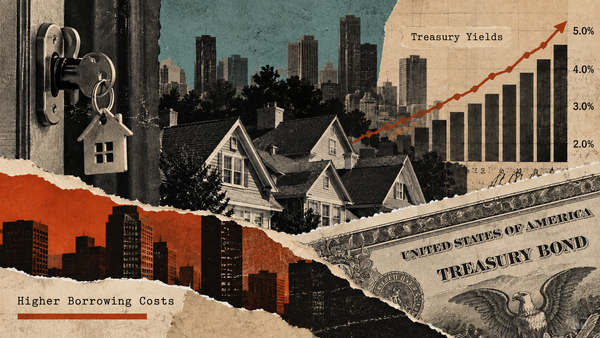
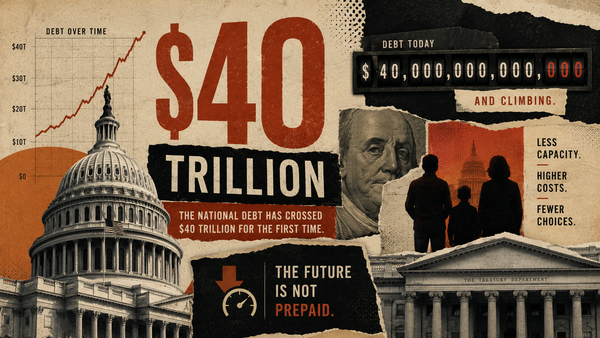
Debt held by the public now rivals the size of the entire economy. Deficits are projected to average $2 trillion per year over the next decade. Interest costs alone are barreling toward $1 trillion annually.
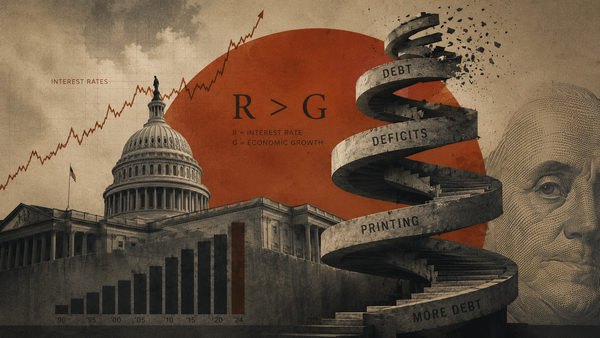
None of this happened by accident. It’s the accumulated result of bipartisan avoidance — years of promising benefits without paying for them, of borrowing treated as neutral, and of fiscal tradeoffs perpetually deferred. The cost of that avoidance is shrinking fiscal space, rising vulnerability in the next crisis, and a growing risk that lenders — domestic and foreign — eventually stop taking U.S. solvency for granted.
A 3% of GDP deficit target won’t solve everything. But it does something Washington has struggled to do for years: it draws a line. It says debt is not meant to grow forever. It says sustainability is not a partisan concept. And it says that credibility matters before markets force the issue for us.
For lawmakers serious about governing in the black — not just campaigning in the red — this resolution is a small but meaningful step. The harder work comes next: turning a target into policy, and policy into discipline.
But acknowledging the problem is how serious reform begins.