This week, the yield on the 10-year U.S. Treasury rose above 5%, revisiting territory last reached nearly two decades ago. The move underscores how far borrowing conditions have shifted from the low-rate environment that followed the 2008 financial crisis. It warrants attention without suggesting that a crisis is inevitable.
Treasury yields help shape financing costs throughout the economy. For prospective homeowners, sustained increases tend to mean higher mortgage rates and larger monthly payments, putting ownership further out of reach. For businesses, more expensive capital can delay investment in equipment, facilities, and hiring. Savers may earn better returns, but the broader economy faces a higher hurdle for productive investment.
Several forces are contributing. Higher oil prices have renewed inflation concerns and expectations that the Federal Reserve will keep policy restrictive. Strong demand for capital, including borrowing to finance artificial intelligence infrastructure, is also increasing competition for investors’ funds.
The fiscal environment compounds those pressures. Persistent federal deficits require substantial borrowing, while uncertainty about Washington’s willingness to address its obligations can raise the compensation investors demand for holding longer-term debt. Higher interest costs then make the budget harder to manage.
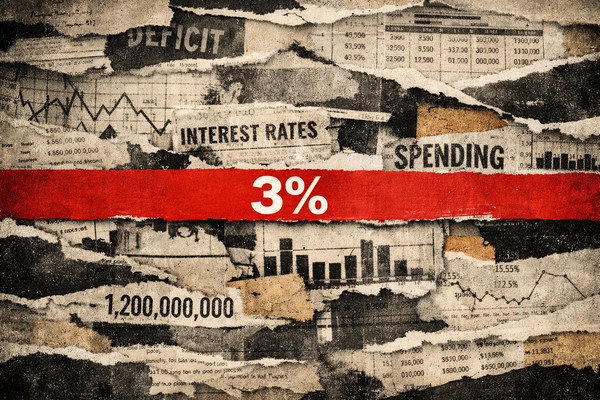
A constructive response would establish a credible, gradual path toward limiting the total annual federal deficit to no more than 3% of GDP. The target would roughly halve today’s deficit share and help stabilize federal debt relative to the economy. That commitment should rest on realistic economic assumptions, enforceable milestones, and decisions about both spending and revenue, rather than optimistic projections or promises of future restraint.
Such a plan would not neutralize an oil shock or guarantee lower yields. It could, however, reduce expected borrowing and reassure investors that Washington has a workable fiscal plan, easing one source of pressure on households and businesses that depend on affordable credit.
Check Engine Light: 5% Treasuries are Warning Us